How interconnected smoke alarms work
Short answer
Interconnected smoke alarms are linked by wire or radio so that when one detects smoke, they all sound. That matters because a closed bedroom door can stop you hearing an alarm in another room. These guides explain how they work, the difference between photoelectric and ionisation sensors, wireless and hardwired systems, sealed 10-year batteries, and where each alarm should go.
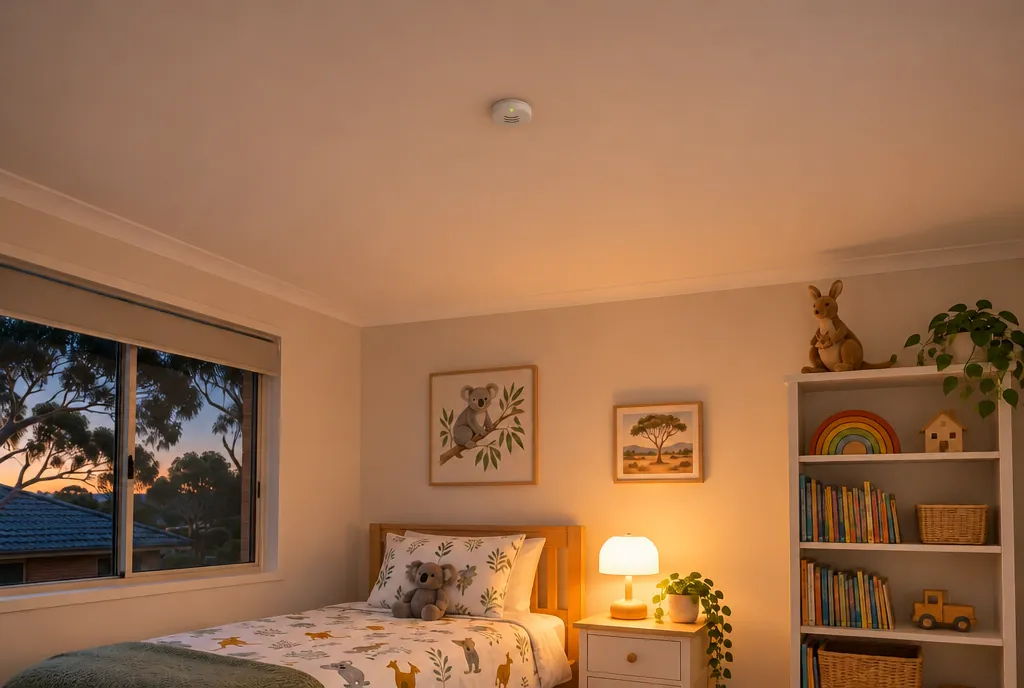
Fire Rescue Victoria puts the case simply: "when a fire starts in a bedroom with doors closed, the smoke alarm outside the bedroom will not activate" [FRV]. The national fire services council, AFAC, recommends interconnected alarms in all sleeping areas, living spaces, hallways and stairways [AFAC]. Fire and Rescue NSW says the number of alarms, their location and their interconnection matter more than which sensor technology they use [FRNSW research].
Start with interconnected smoke alarms explained, then wireless vs hardwired if you are deciding what to buy. If you want to understand what an electrician is quoting for, the wiring explainer shows the concept without turning it into a DIY guide.
Guides in this section
- Interconnected smoke alarms explainedWhat interconnected means, how wired and wireless links work, and where they are required by law.
- Wireless vs hardwired interconnected smoke alarmsCost, installation, legality and fire service advice for each, and how to mix them.
- Photoelectric vs ionisation smoke alarmsHow each sensor works, which fires each catches first, and where photoelectric is the law.
- 10-year lithium smoke alarms: how they work and when they are allowedSealed batteries explained, the state rules, the 10-year clock and the end-of-life chirp.
- Where to put smoke alarms, and how many you needLegal minimum locations by state, recommended spots, worked counts and the placement distances.
- Interconnected smoke alarm wiring explained (and why it is an electrician's job)Active, neutral and interconnect explained with a concept diagram, plus what to ask your electrician.
Sources
Every source below was read on the official page. Last checked: November 2026.
- Fire Rescue Victoria: Smoke alarms (page updated 9 September 2026)
- AFAC (National Council for fire and emergency services): Smoke alarms in domestic and residential accommodation, guideline v4.0 (October 2023)
- Fire and Rescue NSW: Smoke alarms in homes (projects and research)